Rosary prices
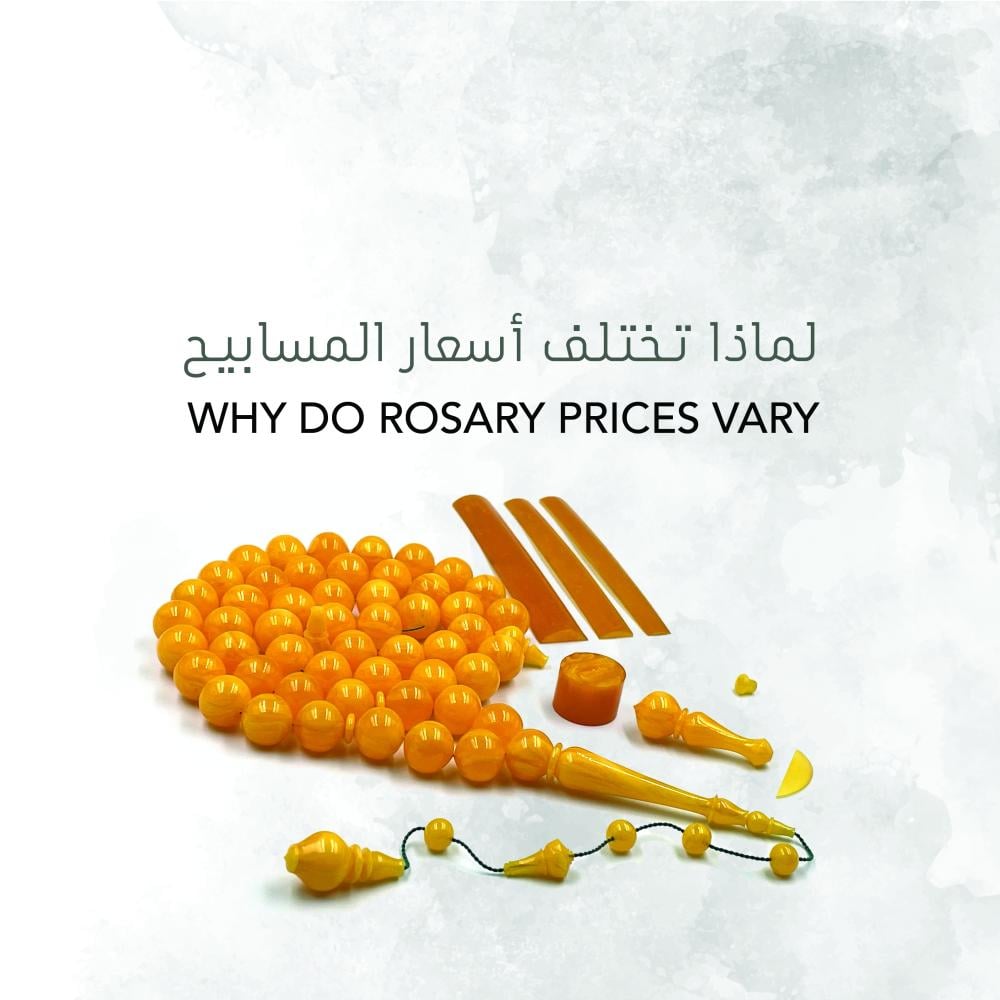
1. Type of raw material
- The material plays the biggest role in determining the price.
- Natural amber, ancient amber, and ivory are considered rare and expensive materials.
- In contrast, plastics and new castings are less expensive materials.
2. How to make
- Hand-made rosaries are more expensive than machine-made ones.
- Hand lathe adds artistic value and makes it more distinctive.
3. The age of the rosary
- Antique rosaries have historical value.
- The older and better preserved the rosary, the higher its price.
4. Rarity of color or shape
- Some colors of amber or turquoise are rare and highly sought after by collectors.
- The hand-engraving and decoration add to its appeal.
5. Brand or manufacturer name
- Some well-known makers in the world of rosaries raise the value of the rosary.
- Signing or stamping the rosary may double the price, as it is documented by the manufacturer and can be referred to at any time.
6. Accessories and packaging
- The ownership, the spacers, and the garnish if it is silver or gemstones affect the price.
- The luxurious packaging increases the value of the rosary as a gift.
7. Supply and demand situation
- Some species become in demand, causing their prices to rise due to high demand.
- Collectors' collections and auctions raise the market value of some pieces.
